


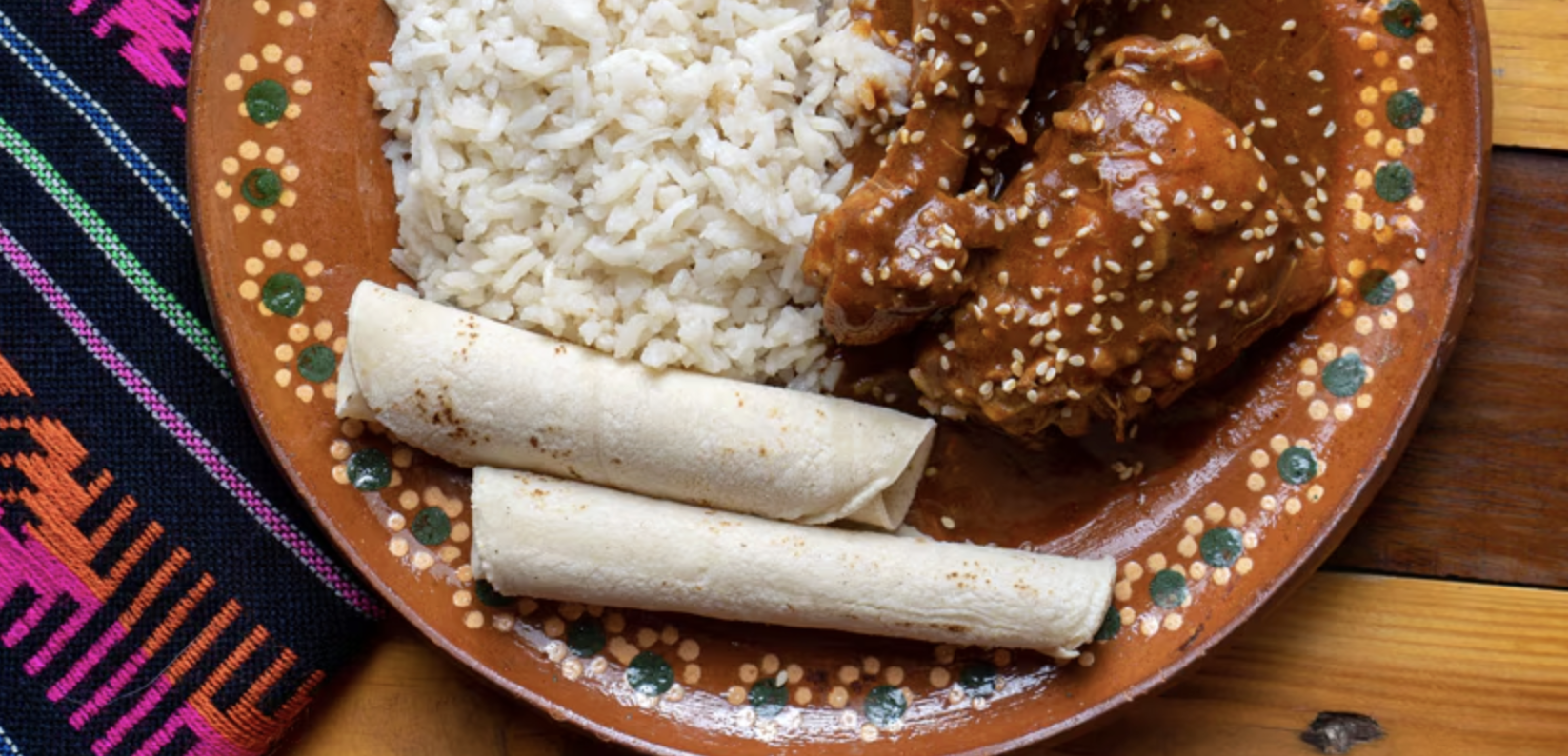
Few dishes capture the soul of Mexico like mole. Deep, aromatic, and layered with flavor, mole is both a culinary masterpiece and a cultural symbol. It’s a recipe that can include 20 to 30 ingredients, take hours (or days) to prepare, and varies dramatically from region to region. But behind this iconic sauce lies a story that weaves together pre-Hispanic traditions, colonial influence, religious ceremony, and centuries of creativity.
Pre-Hispanic Roots: The First Moles
Long before mole was served in restaurants or prepared for holidays, ancient Mesoamerican cultures were already crafting sauces that resemble early versions of mole. These early preparations typically included:
- Chiles (such as chilhuacle, pasilla, or guajillo)
- Tomatoes and tomatillos
- Seeds and nuts like pumpkin seeds, peanuts, or cacao
- Herbs including hoja santa and epazote
Grinding ingredients on a metate (stone slab) helped create thick, earthy sauces used to accompany turkey, venison, or vegetables. These sauces laid the foundation for mole: complex, balanced, and deeply tied to ritual.
The Birth of Mole Poblano
One of Mexico’s most famous culinary legends claims mole was invented in the Convent of Santa Rosa in Puebla during the 17th century. As the story goes, nuns scrambled to prepare a dish for an unexpected visit from the archbishop. Working with what little they had, they toasted chiles, chocolate, nuts, stale bread, and spices—creating what is now known as mole poblano.
Mole became a symbol of Mexico’s new identity—melding indigenous and Spanish traditions into something entirely original.
A Dish of Celebration
From the colonial period onward, mole became a dish served for major celebrations:
- Weddings
- Baptisms
- Patron saint festivals
- Día de los Muertos
- Christmas and New Year gatherings
Preparing mole involves hours of toasting, grinding, frying, and simmering—an act of love often shared across generations.
Regional Moles: A Whole Universe of Flavor
While mole poblano is the most famous, Mexico is home to dozens of regional moles — each with unique colors, textures, and ingredients.
Oaxaca: The Land of Seven Moles
- Mole negro – smoky, dark, rich with chilhuacle negro and chocolate
- Mole rojo – bold and spicy
- Mole coloradito – slightly sweet, often served with chicken
- Mole amarillo – yellow, tangy, and less sweet
- Mole verde – herbal with hoja santa
- Mole chichilo – earthy, made with burnt tortillas
- Mole manchamanteles – “tablecloth-stainer,” featuring pineapple and plantains
Other Notable Regional Moles
- Mole pipián (Central Mexico) – based on pumpkin seeds
- Mole prieto (Tlaxcala) – intensely dark and smoky
- Mole de caderas (Puebla) – made for an annual festival
- Mole michoacano – brighter and chile-forward
- Mole almendrado – almond-based, often paired with pork
The Role of Chocolate: Myth and Reality
Many people associate mole with chocolate, but here’s the truth:
Most moles do not use chocolate. Chocolate appears mainly in mole poblano and some Oaxacan varieties. Its role isn’t to make the sauce sweet, but to add depth and bitterness. The idea that all mole is “chocolate sauce” comes from simplified versions exported abroad.
Modern Mole: Innovation with Respect
Today, chefs across Mexico reinterpret mole with new techniques:
- Dehydrated or powdered moles
- Mole-infused marinades
- Vegan or raw moles
- Fine-dining versions with plated artistry
Despite innovations, one thing remains constant: mole is always a labor of love.
Where to Experience Mole in Playa del Carmen
If you’re visiting Playa del Carmen, you don’t have to wait until a festival to taste authentic mole. Here are the top 10 restaurants in town to try it:
1. Doña Paula’s Fonda
What to try: Mole poblano, enchiladas de mole
📌 Calle 42 Norte between 30 & 35, Gonzalo Guerrero
Why go: Homemade, traditional Puebla-style mole prepared by a local family.
2. El Rincón Veracruzano
What to try: Pollo con mole, enchiladas de mole
📌 Calle 36 Nte & 125 Avenida, Ejidal
☎️ +52 984 745 1925
Why go: A hidden gem where mole is handmade and deeply flavorful.
3. Pik Nik Playa
What to try: Enchiladas de mole
📌 Calle 10 Norte between 20 & 25, Centro
Why go: Casual, walk-in friendly spot with surprisingly authentic flavors.
4. Axiote Cocina de México
What to try: Mole-based seasonal dishes
📌 Calle 34 Norte between 5ta & 10, Gonzalo Guerrero
🌐 Website
Why go: Elevated dining where mole is crafted with attention to presentation.
5. Los Aguachiles (Calle 34)
What to try: Enchiladas de mole (seasonal)
📌 Calle 34 Norte & 25 Avenida
Why go: Seafood-focused, but mole is surprisingly delicious when available.
6. El Fogón
What to try: Mole enchiladas (occasional special)
📌 Av. Constituyentes & 30 Avenida
Why go: Playa’s famous taquería occasionally features traditional mole.
7. Las Quecas (Ejidal)
What to try: Quesadillas de mole
📌 Calle 38 Sur, Ejidal
Why go: Local spot where mole meets street-style quesadillas — cheap and delicious.
8. La Sabrosura Del Fogón
What to try: Mole casero (home-style plate)
📌 Avenida 30 between Calle 34 & 38
Why go: Rustic, traditional mole made with care by neighborhood chefs.
9. Káajal Restaurant
What to try: Enchiladas de mole for breakfast
📌 Avenida CTM between 10 & 15
Why go: Unique option to enjoy mole at breakfast or brunch.
10. La Perla Pixan Cuisine & Mezcal Store
What to try: Mole negro (Oaxaca-style)
📌 Calle 38 Norte between 5ta & 1a Avenida
Why go: Combines mezcal tasting with deep, smokey Oaxacan-style mole.
Why Mole Matters
Mole isn’t just a sauce — it’s a story.
A story of indigenous innovation, colonial fusion, regional identity, and Mexican pride. Every time you taste mole, whether rich and dark, bright and herbal, or nutty and vibrant, you’re tasting centuries of history in a single bite.
And if you’re in Playa del Carmen, these restaurants make it easy to experience that history today.
About the Author
Hi, I’m Matt from Peninsula Properties, your go-to guide for living, investing, and thriving in Playa del Carmen and the Riviera Maya. In 2008 my husband and I quit our jobs in Boston, Massachusetts, sold everything we owned and drove to Playa del Carmen, Mexico to start Peninsula Properties, our property management, vacation rental and real estate company. Now 17+ years later, I am sharing our experience helping expats and property owners navigate the local market. I share honest insights, practical tips, and insider knowledge to make your move—or your investment—a success.
From finding the best schools and maximizing rental income to understanding local regulations and uncovering hidden gems, my goal is to give you clear, actionable advice you can trust. When I’m not exploring the beaches or scouting the newest rental opportunities, I’m sharing stories, guides, and strategies that help you make the most of life in paradise.
Follow along for expert tips, local updates, and everything you need to live, invest, and enjoy the Riviera Maya to the fullest.
Peninsula Properties
Property Management • Rentals • Real Estate
📍 Playa del Carmen, Mexico
🌐 www.nasplaya.com 🔑 Rentals: rentals@nasplaya.com
📊 Ventas: buy@nasplaya.com 🏘 Property Management: bookings@nasplaya.com
✏️ Read the Latest from our Blog
- How to Pay Your Predial in Playa del Carmen (2026 Homeowner Guide)
- How Non-Mexican Residents Get an RFC to Pay Rental Taxes in Playa del Carmen & the Riviera Maya
- Mayan vs. Aztec — Differences, Regions, and Cultural Legacies
- The Meaning Behind Cenotes and Their Sacred Role in Mayan Culture
- Top Cenotes Near Playa del Carmen & Riviera Maya: Sacred Pools of the Maya